OT focuses on function, adaptation, and real-world outcomes — not just diagnoses. Each session builds on patient goals and lived experience. Notes should reflect that reasoning, not generic checklists.

OT focuses on function, adaptation, and real-world outcomes — not just diagnoses. Each session builds on patient goals and lived experience. Notes should reflect that reasoning, not generic checklists.
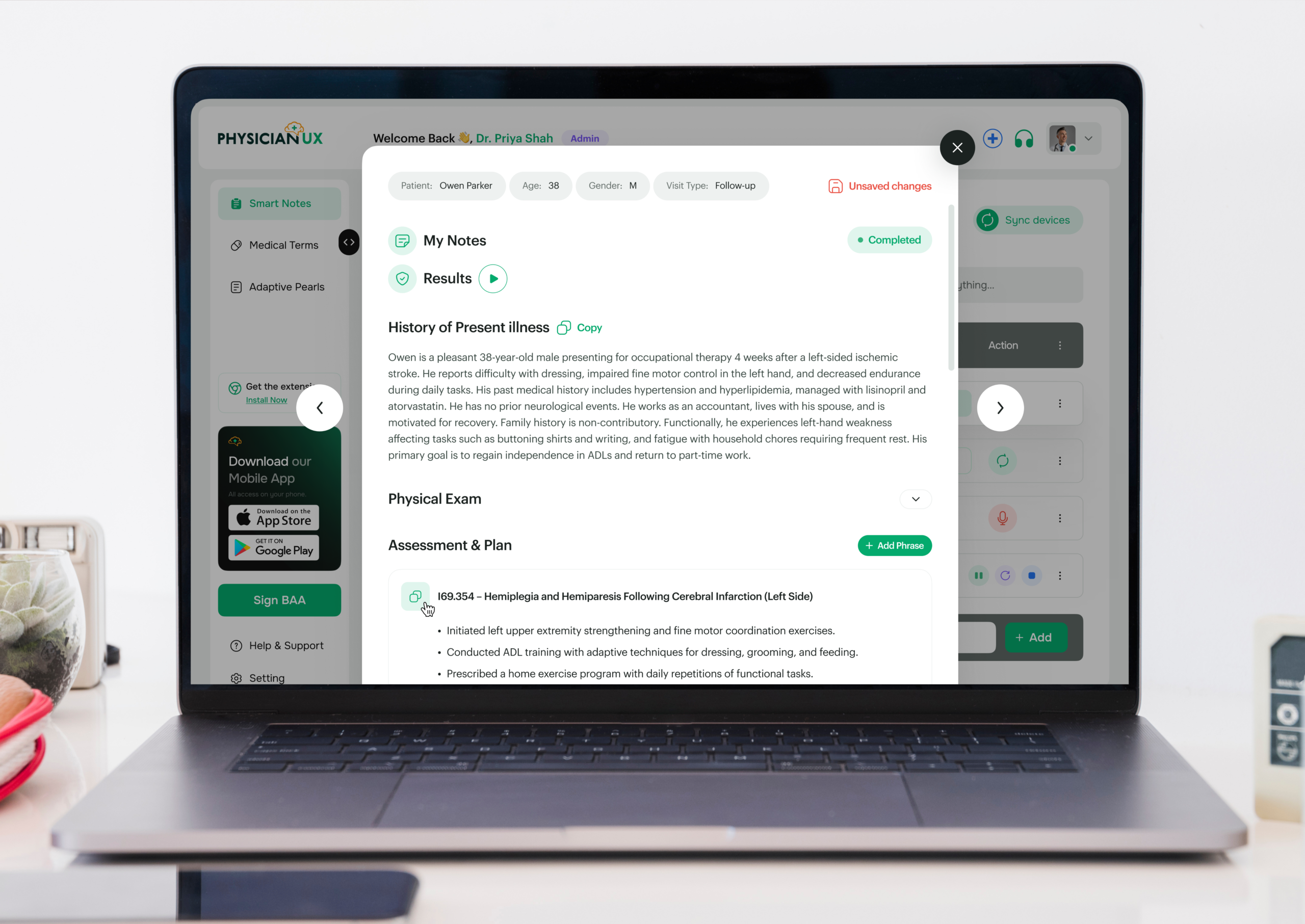
Occupational Therapy is centered on function — how patients move, adapt, and regain independence in real-world settings. Each session builds on goals, progress, and lived experience, not just diagnoses
If you practice Occupational Therapy, you know that notes often take longer than the session itself. You must document detailed functional assessments, progress toward goals, adaptive strategies, and coordination with other care providers — all while maintaining patient engagement.
You’re capturing:
All while keeping the session patient-centered — something no rigid template can fully support.
OT sessions often require integrating multiple assessments, adapting interventions in real time, and documenting progress efficiently. By the time you finalize your notes, plan next steps, and communicate with the care team, the next patient is already waiting.
The cognitive load is significant. Missed details can affect functional outcomes, safety, and compliance. Extended charting hours increase clinician fatigue and burnout.
Physician UX lifts the documentation burden — without interrupting your workflow. It listens and structures notes in real time, supporting the natural flow of Occupational Therapy sessions.
Dr. Martinez, an occupational therapist in a busy outpatient clinic, begins her morning with six consecutive sessions: functional assessments, adaptive equipment training, home safety evaluations, and therapy follow-ups.
Typically, she would be mentally juggling progress notes, goal tracking, intervention adjustments, and caregiver education — all while maintaining patient engagement.
Today, Physician UX is listening in the background.
During her first session, the platform structures a detailed HPI and functional assessment based on patient performance, adaptations used, and goal progression. By the end of the session, her note already includes an aligned assessment and plan — with tasks queued for follow-ups, therapy adjustments, and equipment orders.
Her next patient requires home safety training and caregiver guidance. Physician UX identifies key elements, surfaces pearls for safety interventions, and organizes tasks — all without slowing the session.
By mid-morning, Dr. Martinez notices something rare: she is fully present with patients, not mentally reconstructing notes between sessions.
Documentation that would normally extend into the evening is already complete. Tasks are organized, follow-ups mapped, and the burden of manual charting lifted. She can now focus entirely on patient progress and functional outcomes.
What used to feel like constant multitasking now feels like practicing Occupational Therapy at full capacity.
When charting becomes lighter and less intrusive, therapy sessions transform. Physician UX ensures notes are accurate, timely, and aligned with best practices — freeing cognitive bandwidth for critical decision-making and patient-centered care.
Better notes also mean safer care:
In a specialty defined by function, safety, and individualized care, clarity isn’t optional — it’s essential.
Join the clinicians who’ve upgraded their workflow — and feel the difference for yourself.